Home Sweet Home Svg, Canada Day Svg: A Designer's Real-World Review
As someone who has spent years stitching designs onto everything from delicate baby onesies to heavy-duty work aprons, I know that the difference between a project that looks professional and one that looks like a mistake often comes down to the file itself. When I first encountered the Home Sweet Home Svg, Canada Day Svg, my initial reaction wasn't about the patriotic theme alone; it was about how this design would translate from a digital screen into a tangible, stitched reality. This isn't just another graphic for a print-on-demand shop; it is a machine embroidery design that demands scrutiny before it ever touches your hoop.
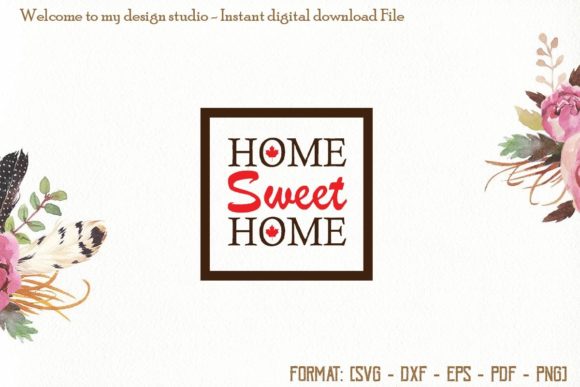
The immediate mood this piece creates is warm, inviting, and distinctly celebratory. The layout suggests a classic, slightly rustic aesthetic that fits perfectly within the "home" category of decoration. However, as an experienced reviewer, I look past the visual appeal to the structural integrity of the stitches. Does the design have enough room to breathe? Will the lettering hold up after twenty washes? In the context of Print Templates and Graphics available for small business owners, the answer depends entirely on how you plan to deploy it.
From Digital File to Finished Product: The Reality Check
Let me walk you through a real scenario. Imagine you are preparing inventory for a local craft fair or launching a new line of boutique products for your Etsy shop. You decide to create a custom embroidered tote bag for Canada Day. You select the Home Sweet Home Svg, Canada Day Svg as the centerpiece. On the screen, the lines look crisp and the colors pop. But once you load the file into your digitizing software and send it to the machine, the story changes.
If this design relies heavily on tiny details or extremely thin lines, you might find yourself fighting against the fabric. Embroidery is not printing; it is texture. The success of your embroidery project hinges on whether the design accommodates the natural thickness of thread. For a tote bag, which is often made of canvas or cotton duck, the design needs sufficient density to stand out without puckering the material. If the stitch density is too high, the fabric will bunch up, ruining the clean look of your custom apparel. If it is too low, the underlying fabric might show through, making the product feel cheap.
I also considered using this design on a sweatshirt for a family gathering. The soft fleece of a sweatshirt requires a different approach than a stiff tote. Here, the Home Sweet Home Svg, Canada Day Svg needs to balance well with the nap of the fabric. If the design features a lot of satin stitch around the edges of letters, it can create a shiny, raised effect that looks great on smooth fabrics but might catch on things when worn on a cozy sweater. It is crucial to evaluate if the design includes adequate running stitch or fill stitch areas to provide stability without adding excessive bulk.
Navigating Fabric Challenges and Hoop Sizes
Not every surface is created equal, and knowing where to place your embroidery file is half the battle. While this design is versatile, there are specific scenarios where caution is required. For instance, attempting to stitch this on a curved surface like a baseball cap can be tricky. Unless the digitizer has specifically compensated for the curvature of the hat, straight lines in the Home Sweet Home Svg, Canada Day Svg might warp, making the text difficult to read.
Similarly, if you are working with textured fabrics like linen or raw silk, the design might get lost in the weave. These materials require a stabilizer that is robust enough to support the weight of the threads. Without the right stabilizer, the tension of the machine could cause the fabric to distort, leading to a finished product that looks misaligned. I always advise testing on scrap fabric first. This simple step can save you hours of frustration and prevent wasted materials.
Small hoop sizes present another hurdle. If you are creating personalized gifts like baby clothes or small patches, the size of the design relative to the hoop matters immensely. A design that looks balanced on a large pillow cover might become cluttered and hard to distinguish when scaled down for a baby's bib. The stitch count must be appropriate for the scale. If the file includes intricate details that are too small for a 4x4 hoop, they may disappear completely or merge together, resulting in a muddy appearance.
Impact on Brand Value and Customer Trust
For Etsy sellers and small shop products, the quality of the embroidery directly impacts customer trust. A poorly executed design can make even the best handmade item look amateurish. Conversely, a well-executed commercial embroidery job elevates the perceived value of the item. When a customer receives a gift with crisp, clear stitching and no visible puckering, they associate that quality with the brand behind the product.
The Home Sweet Home Svg, Canada Day Svg has the potential to be a strong asset for holiday-themed merchandise. Its theme resonates with people looking for holiday embroidery items that celebrate home and country. However, the success of this digital embroidery file in generating sales depends on the final presentation. If the thread colors chosen do not contrast well with the fabric, the design loses its impact. For example, using a light gold thread on a cream background might result in a design that is barely visible, whereas a deep red or navy blue would make the finished product pop.
Furthermore, consistency is key for brand consistency. If you plan to use this design across multiple items—such as tote bag design, kitchen towels, and pillow covers—you need to ensure that the sizing and placement remain uniform. Inconsistent placement can confuse customers and dilute your brand identity. Taking the time to mock up these items digitally before stitching them can help you visualize the final outcome and make necessary adjustments.
Practical Notes for the Discerning Designer
Before you rush to download and start stitching, there are several practical steps you must take. First, review the file formats provided. The description mentions PNG, SVG, EPS, DXF, and PDF, which is excellent for versatility. Ensure that the version you are using is optimized for your specific embroidery machine. Some files are better suited for applique design techniques, while others are designed for direct stitching.
Always check the licensing terms. If you intend to sell the finished items, you need to confirm that the license allows for commercial projects. Many designers offer personal use licenses only, so reading the fine print is essential to avoid legal issues. Additionally, inspect the small details in the design. Are there any loose ends or tiny elements that might break during the stitching process? If the design is dense, consider reducing the density slightly to improve the finish on thicker fabrics.
Finally, compare light and dark fabric backgrounds. A design that looks perfect on white fabric might look drastically different on a dark shirt due to the way light reflects off the threads. Testing the design in black and white mockups can give you a clearer idea of the contrast and legibility. By following these guidelines, you can transform the Home Sweet Home Svg, Canada Day Svg from a simple digital asset into a high-quality, marketable handmade product.
In conclusion, this design offers a solid foundation for a variety of creative endeavors. Whether you are a hobbyist looking to make a unique personalized gift or a seasoned entrepreneur expanding your craft business, understanding the nuances of embroidery is vital. With careful planning and attention to detail, the embroidery project featuring this design can achieve a level of professionalism that delights customers and builds lasting loyalty.